Astro Pig
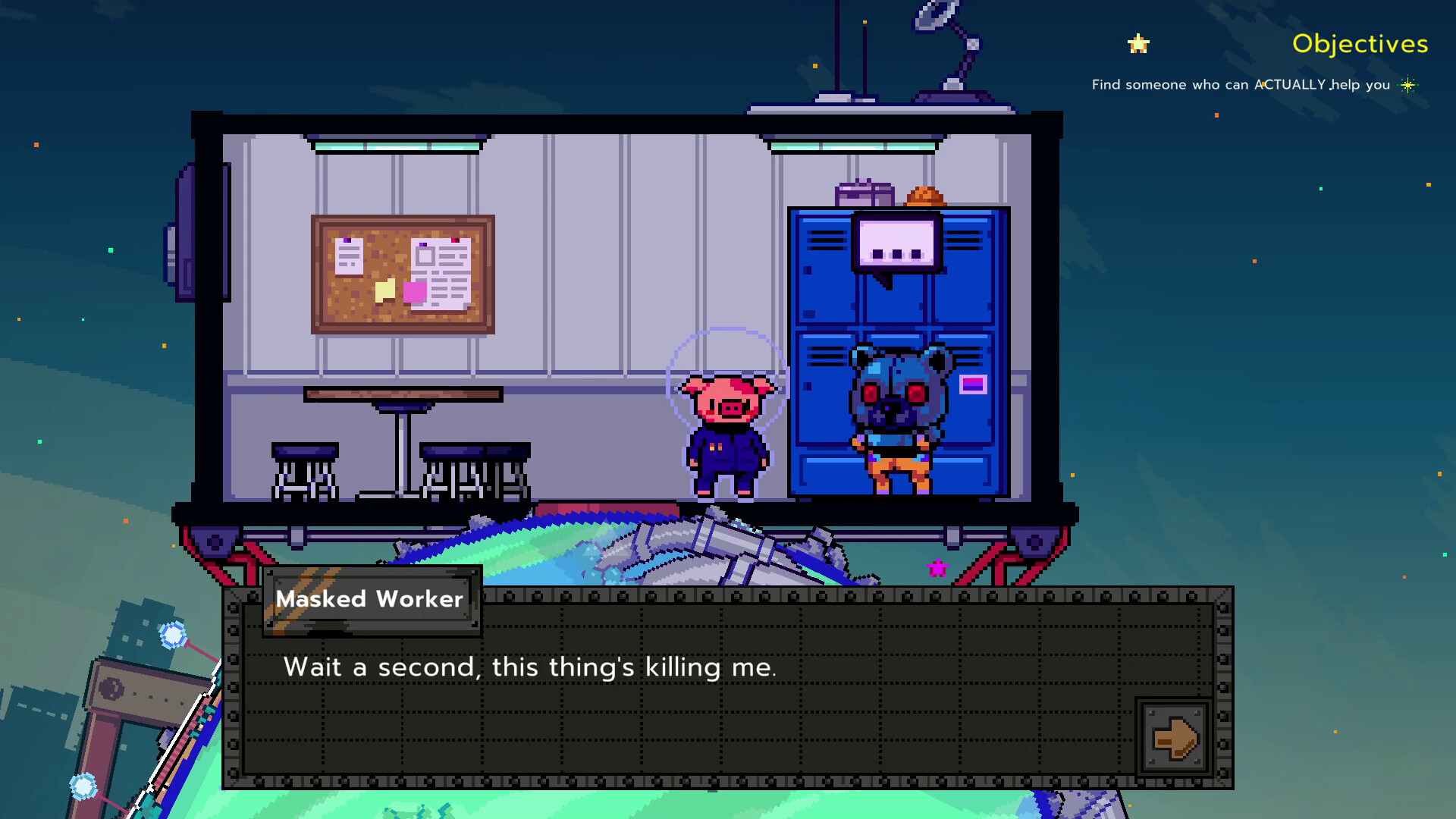
A lo-fi adventure, puzzle, and platformer game about a little space cadet pig and his smart spaceship.
- executive production
- game design
- level design
- localization
- lyrics and vocals
- marketing
- narrative design
- pr
- qa
- ui/ux
- writing
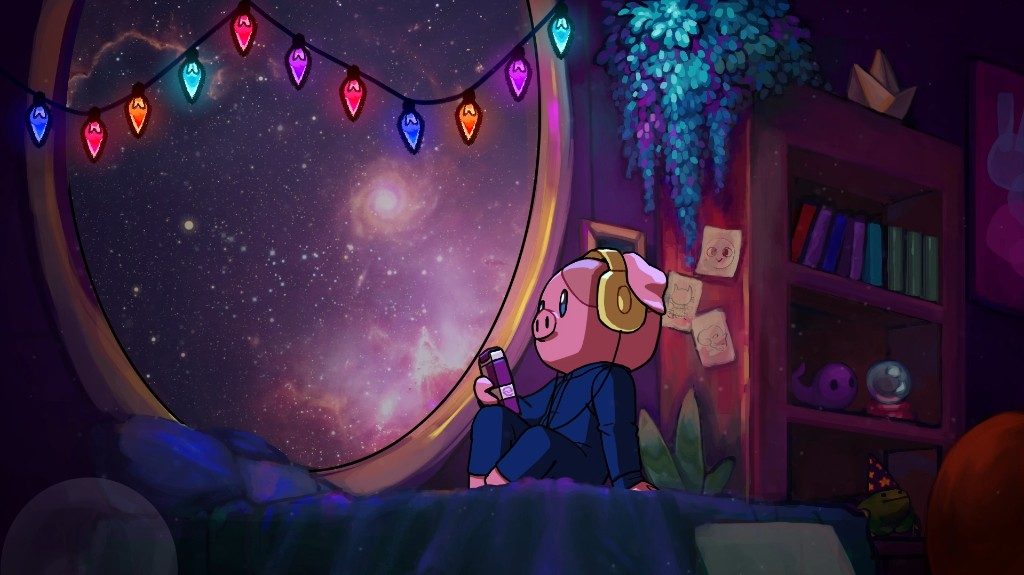
A 90-s inspired lo-fi adventure puzzle platformer about a piglet astronaut and his intelligent ship.
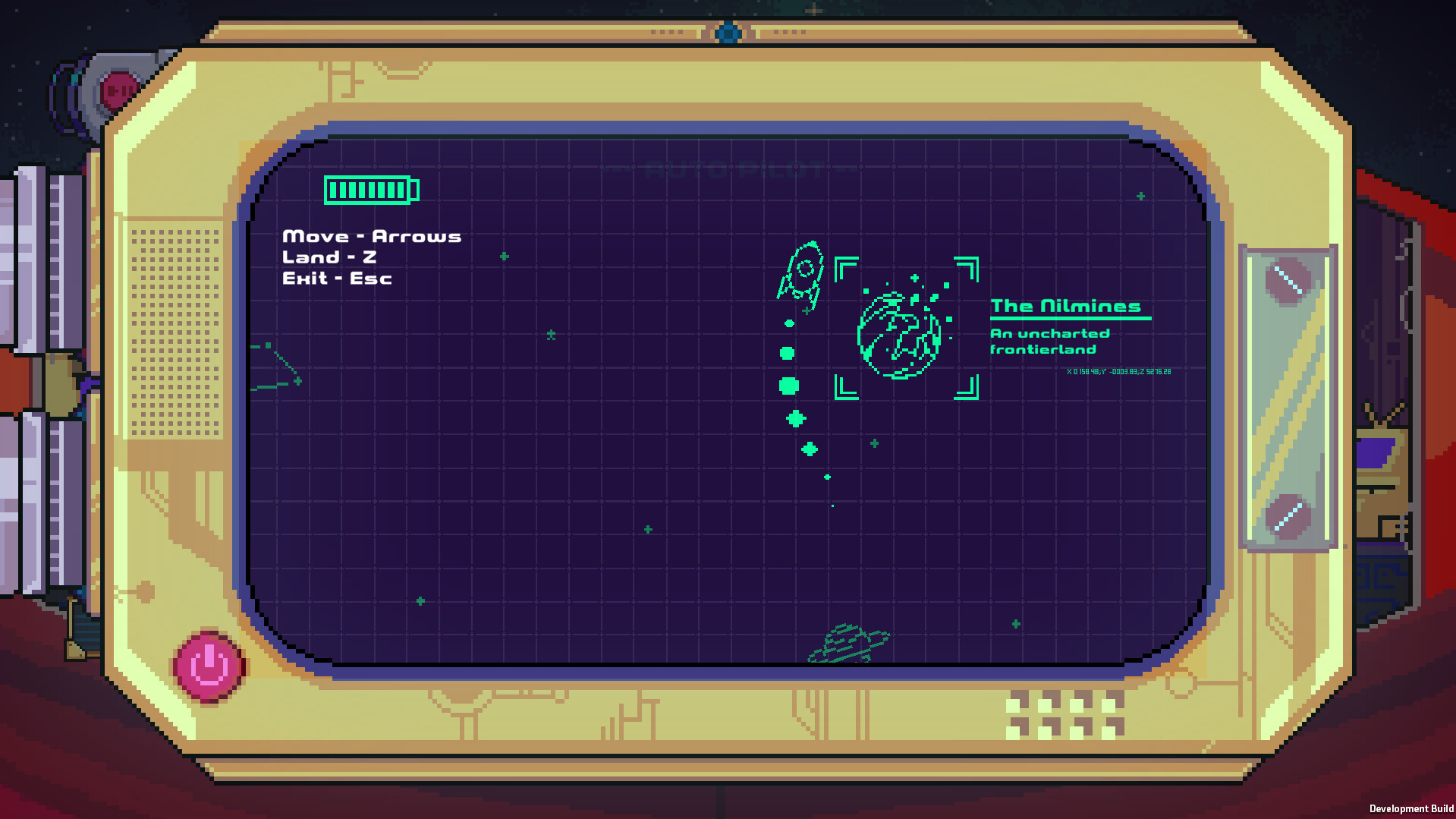
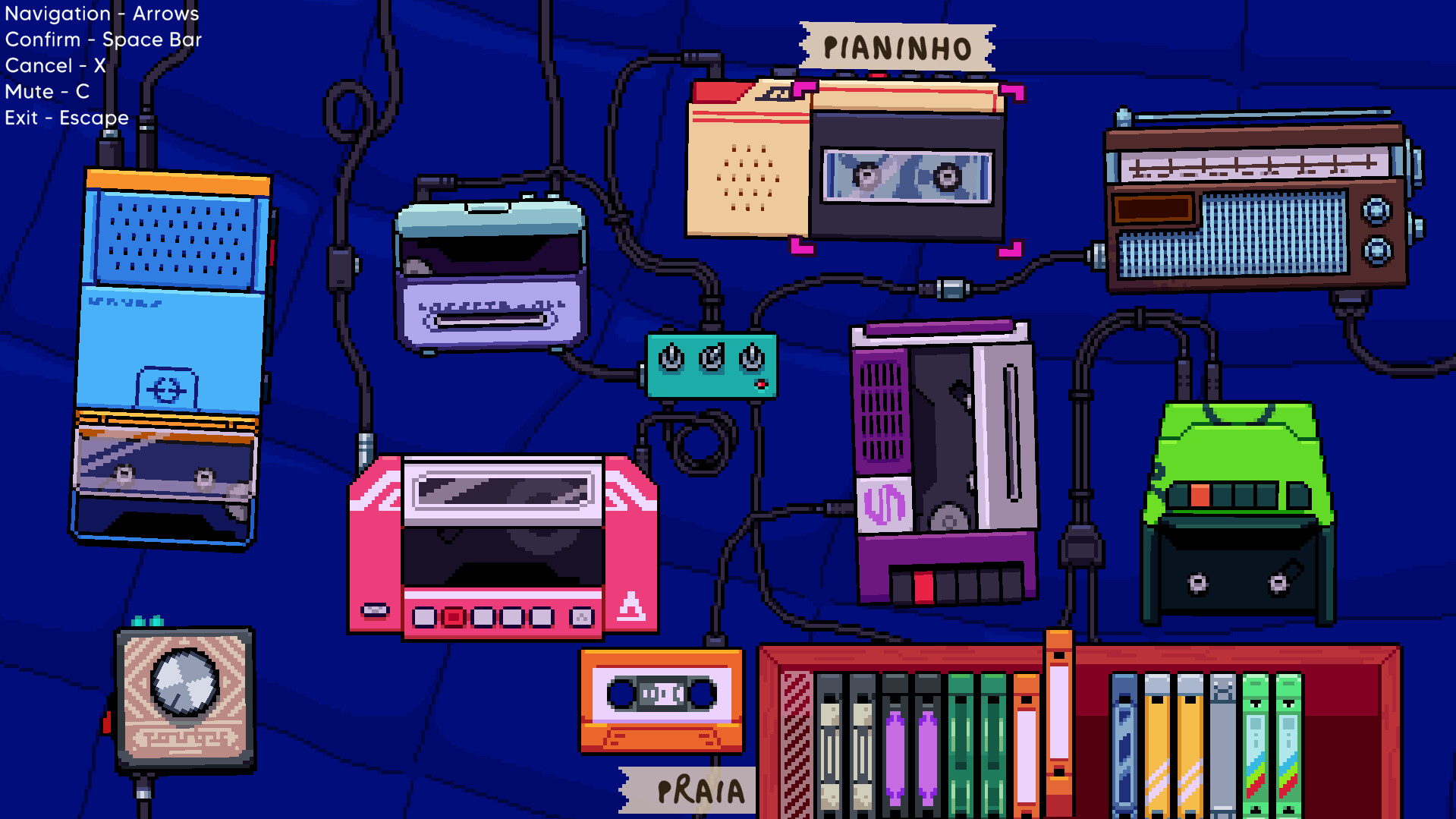
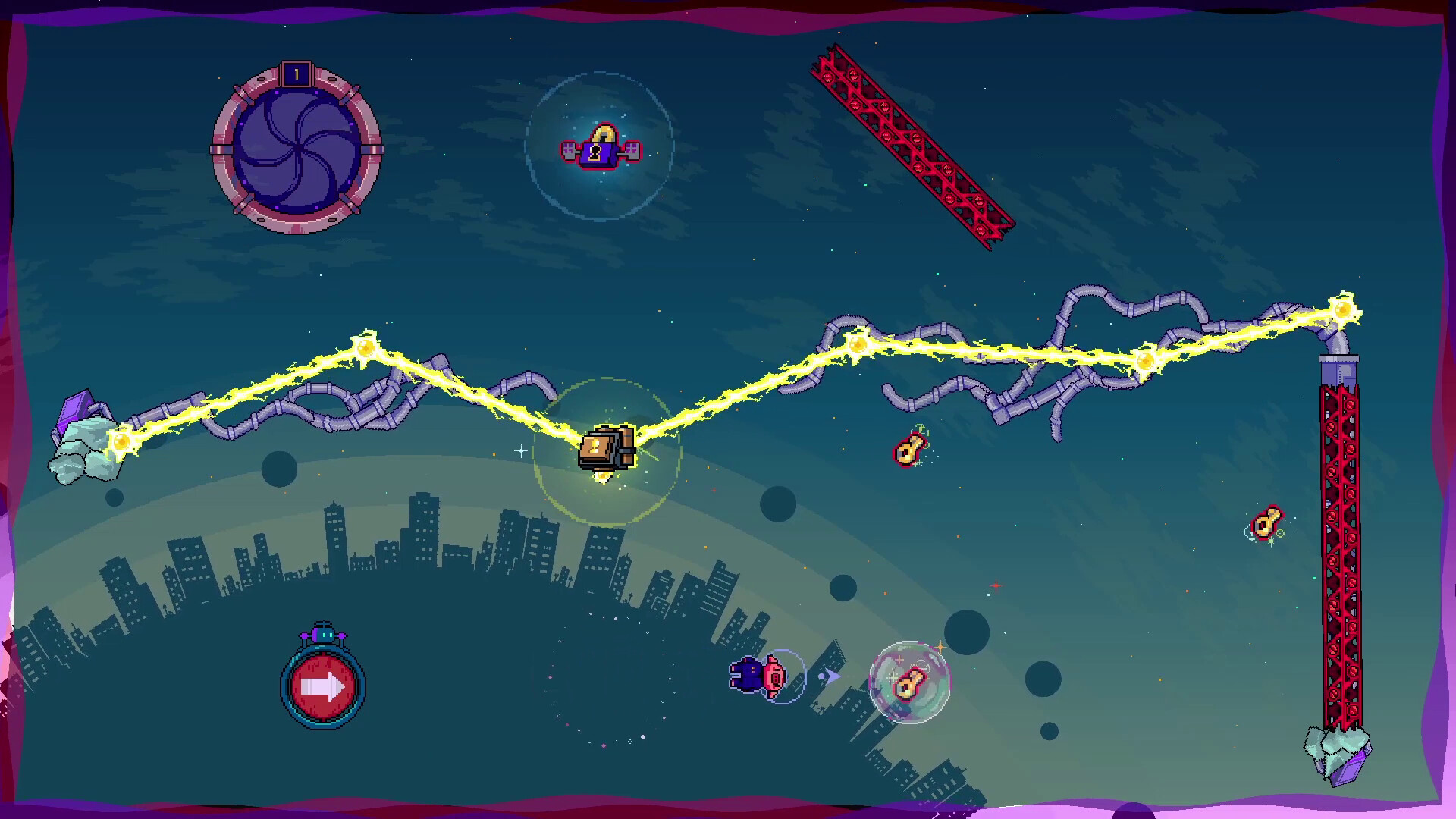
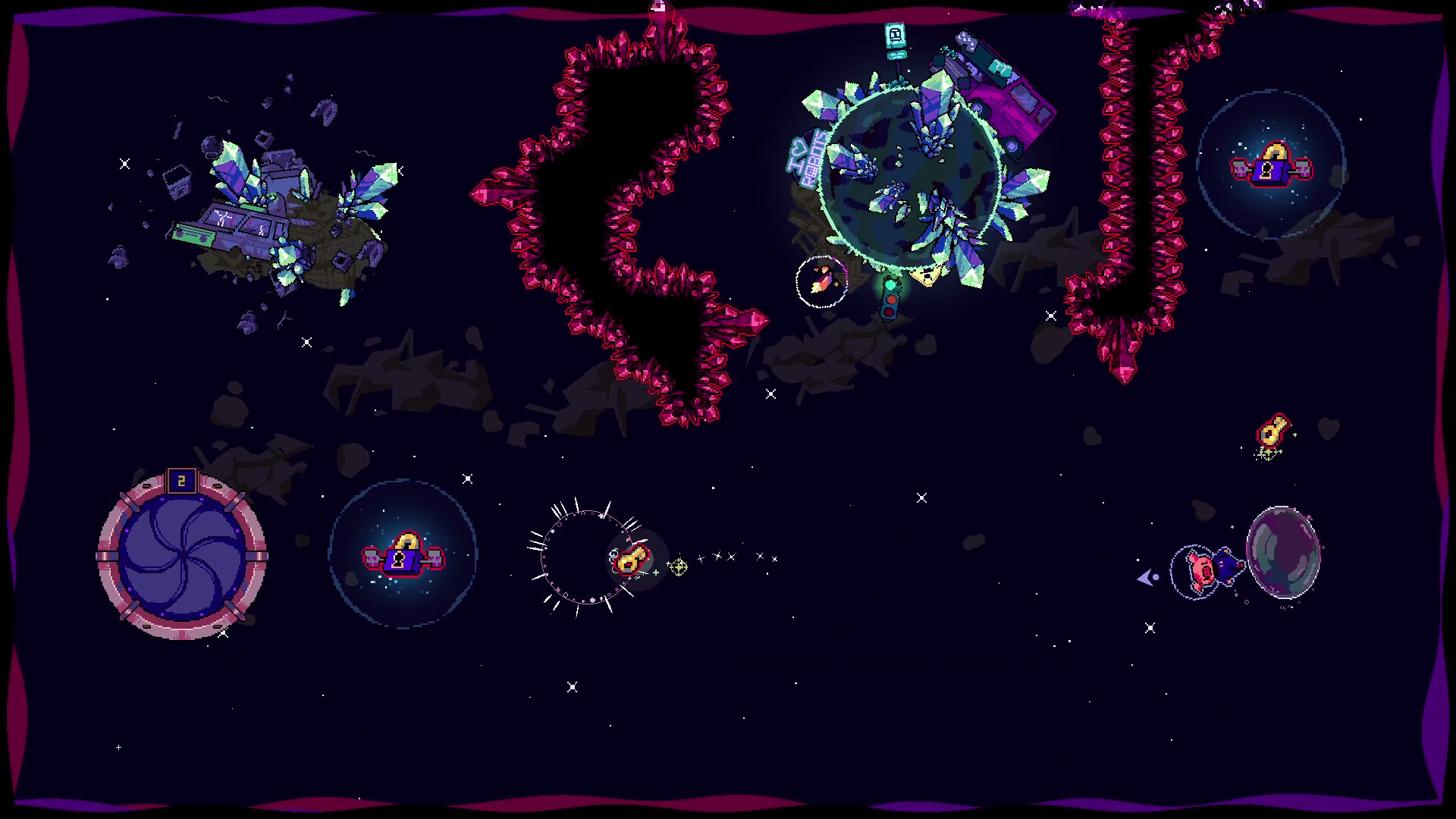
a game jam and the origin of Garoa
The Astro Pig project defined Garoa’s trajectory, and Garoa’s very existence, for several reasons - the first of them being, quite literally, the reason Garoa was created.
Before Garoa existed, I was part of GDP UFRJ, a university game development group. Among the various things I did there - project production, game design, narrative, coordination, selection processes, finance, and marketing - we also occasionally organized and took part in game jams. In 2018, we heard there would be a jam inside another event, Hacktudo (a digital culture festival), at Cidade das Artes, a major cultural complex in Rio de Janeiro. The jam, called Gamethon, was going to give out cash prizes - which was not common at the time, and naturally made us curious. I don’t really remember anymore whether we received a formal invitation for GDP to take part, or whether we found the event on our own. My vague memory is that it was the first of those, because several members of the collective of game development companies in Rio de Janeiro, at the time called RING and later ACJOGOS-RJ, were involved in the event; some companies were sponsoring it, more experienced industry professionals were on the judging panel, and in general there was a close relationship with the local community. So we decided to take part as a group.
We split into teams of three to five people and, if I’m not mistaken, formed four different teams, including active and former GDP members. I ended up inviting myself onto a team that was already formed: Gabriel Raposo, Igor Carneiro, Pierluigi Piccolo, and Carolina Sá. I wanted to take part and didn’t have a group, and to this day I joke that I’m only part of Garoa by chance, since they hadn’t originally been planning to invite me.
The five of us went in, registered, agreed among ourselves that we were going to win no matter what, paid the entry fee, and spent the weekend of November 2nd to 4th, 2018 inside Cidade das Artes itself making the game. We took first place.
You can’t tell the story of Astro Pig without telling a bit about that game jam, because so many things happened that weekend that today we look back on them with a certain superstition, almost as if every one of them had contributed in some way to the result.
A lot of things went wrong. Originally, we were all going to camp outside, on the lawn. A huge windstorm carried off some of the tents (and knocked over expensive equipment, like TVs, monitors, and desktops), followed by torrential rain, and everyone had to move the camp into the covered part of the building (still open to the air, under the pilotis, the columns the building stands on). That meant sleeping directly on pedra portuguesa - the uneven mosaic stone pavement used all over Rio - which, if you have never tried it, I don’t recommend. One night, Igor was bitten by some insect we still suspect was a spider; he got very sick, with a fever, chills, and dizziness. To top it off, a hospital across from the event caught fire that same weekend.
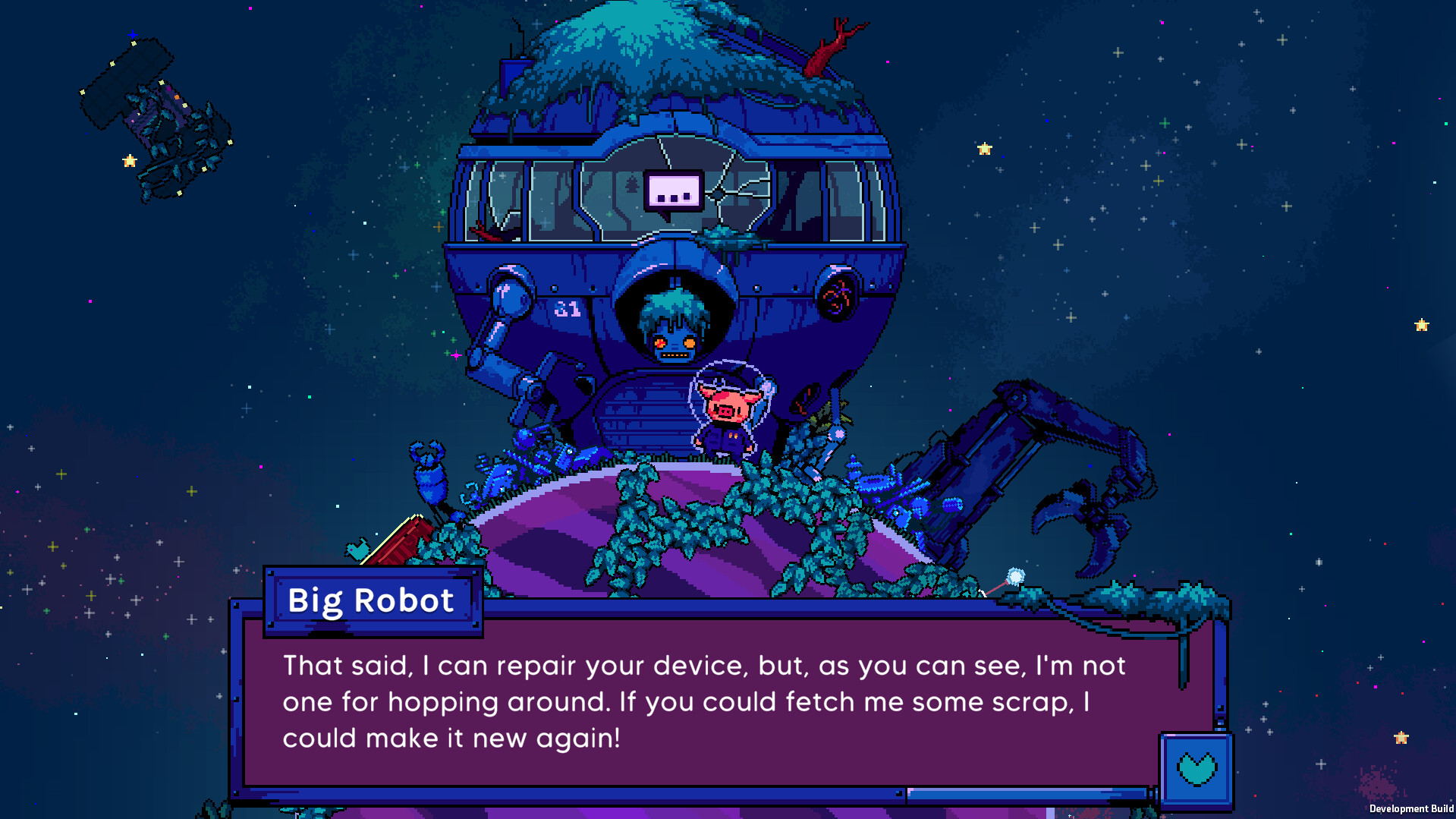
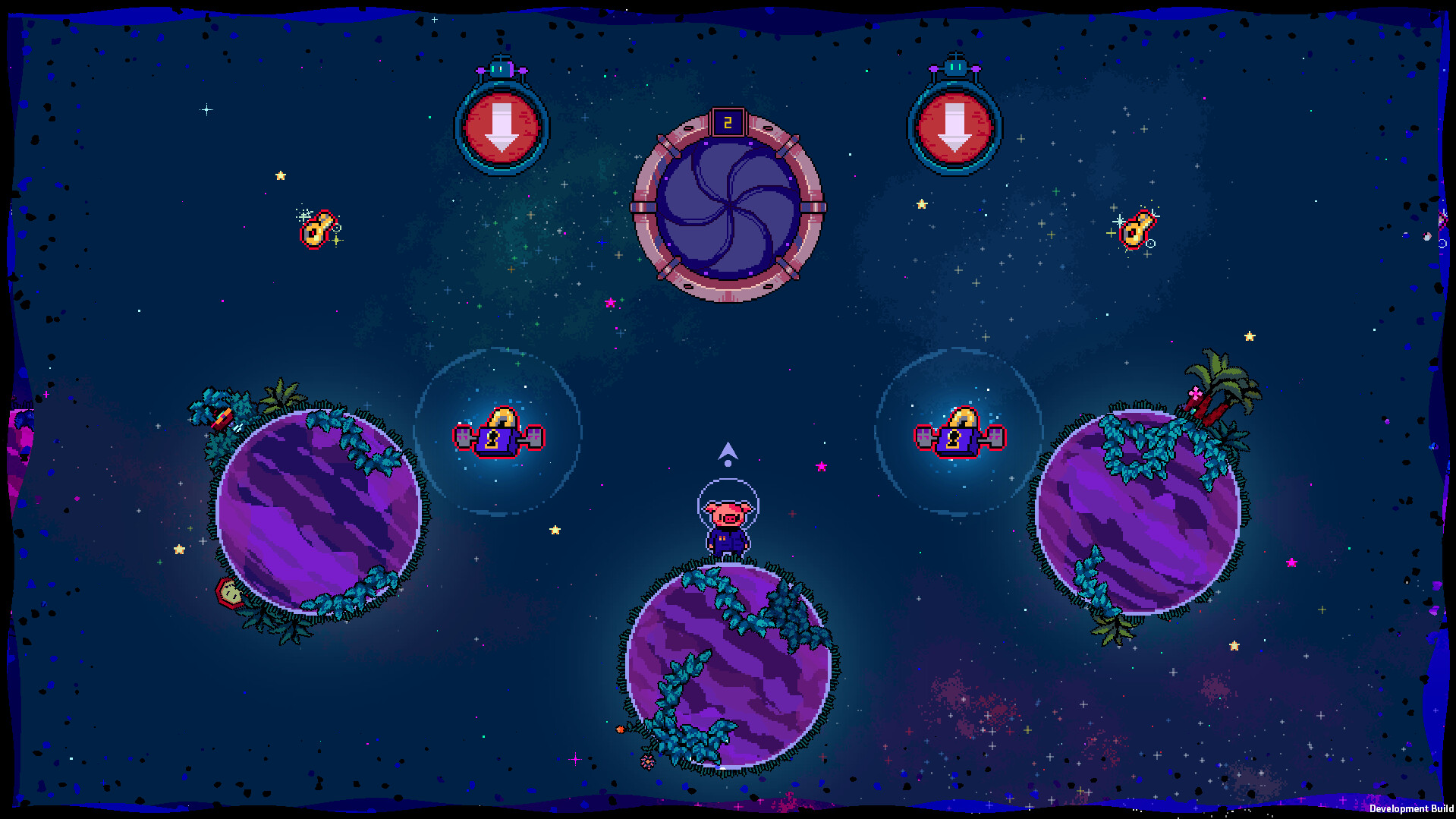
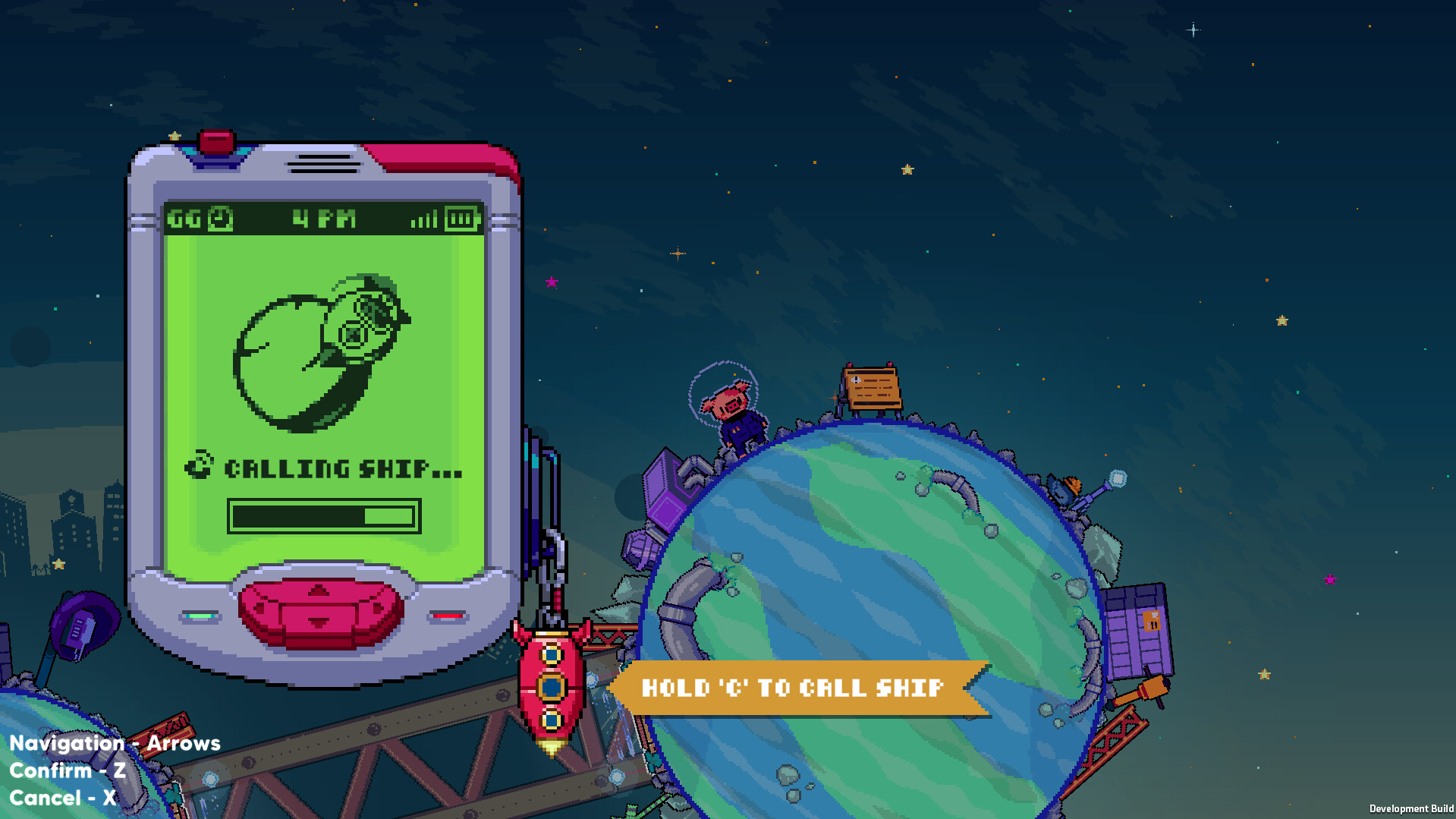
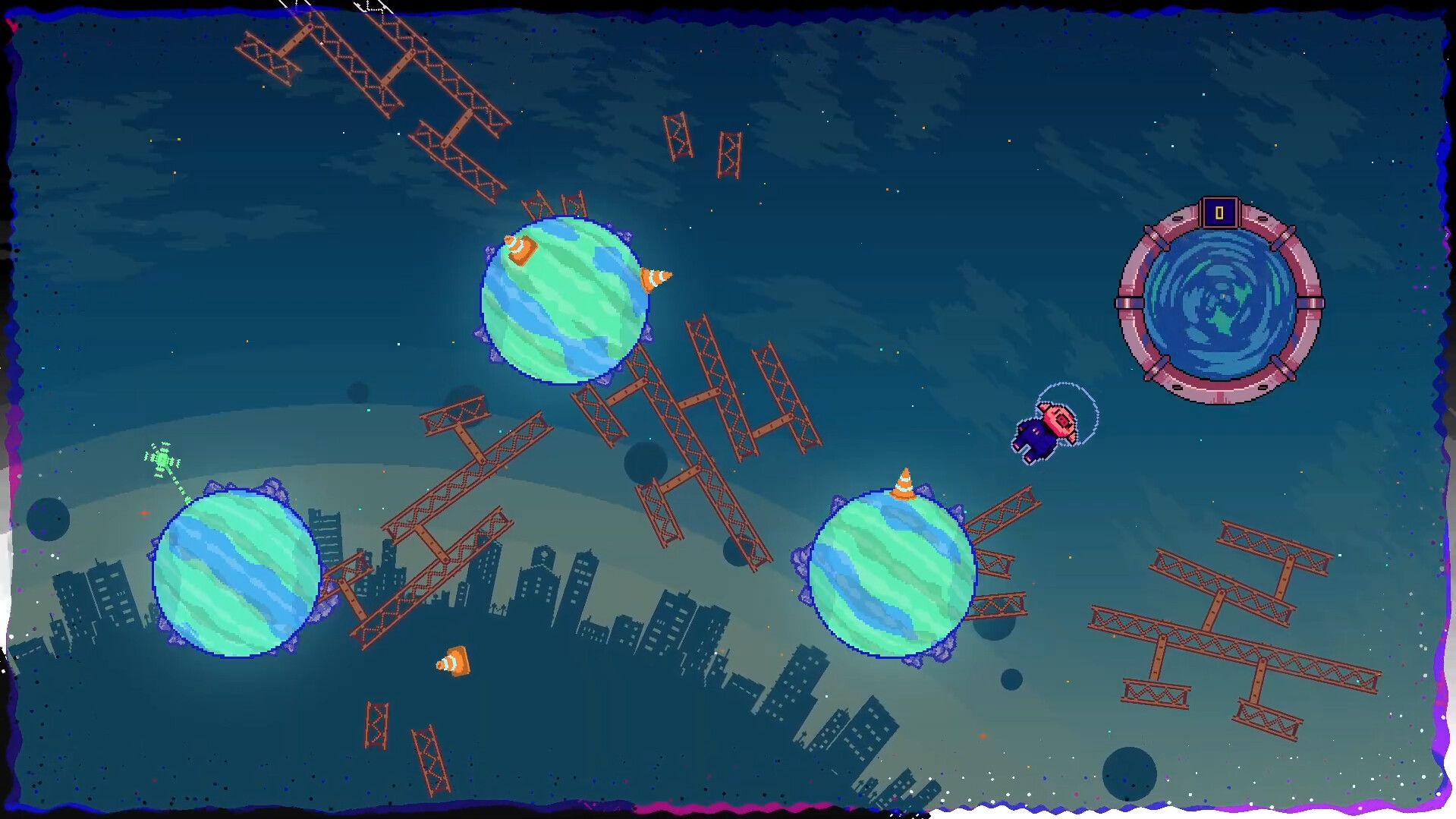
The theme was “Quando porcos voam” (“When pigs fly”), the expression used in Brazil for something absurd or practically impossible. We spent the first hours of the jam discussing ideas and landed on two or three proposals. One of them involved a kind of tower defense with little pigs in hot-air balloons. We ended up discarding that idea in favor of another: an astronaut piglet who jumped between small planets, in a world that felt a bit like The Little Prince, and used Newton’s second law to throw objects, change his own trajectory in mid-air, and solve small puzzles. The levels would be short, fast, and dynamic. That was Astro Pig.
Another detail: that weekend, on Sunday, I went to take the ENEM (the Exame Nacional do Ensino Médio, more or less the equivalent of the SAT in the United States). I had already been in university for years, but I had a habit of taking the exam almost every year as a way of keeping myself current in the subjects. The problem was that the exam was on the other side of the city - I left Barra da Tijuca in the morning, went to Ilha do Governador (neighborhoods on opposite sides of Rio), spent about two hours in transit, took an exam with an essay, math, Portuguese, and dozens of questions, finished relatively quickly, and crossed the city back to arrive in time for the jam’s final presentation. But because I wasn’t sure what time I would get back, we had to put Igor himself on the final presentation - him, in his fever dream, with the symptoms of the spider bite. Even so, we won first place.
We had managed to make a prototype we liked a lot, with completely original art, music, and level design. The interface and the user experience were still quite minimal, as you would expect from a jam project, but that is where the first Astro Pig prototype was born, which, if the link is still working, can be played here.
After the jam, we stayed together informally. We kept a Telegram group, talked about the project, and started organizing new lines of work. At some point, a funding call opened in Rio de Janeiro from Faperj (the Rio de Janeiro State Research Support Fund, a government-subsidized program for financing projects), called Startup Rio, which had a track that accepted video game submissions. Some colleagues of ours from RING had already gotten funding through the program, and we heard from different people that Astro Pig could be a good candidate - in the meantime, we had taken the prototype to public presentations and playtests in different places around Rio de Janeiro: game fairs, anime events, a circus, and other pretty varied spaces. So we already had some validation that there was interest in the project. We applied and were selected to produce the game.
It was from there that Garoa was formally born, with a name, an identity, and a logo, around May or June 2019. But in practice, Garoa was born together with Astro Pig itself.
Startup Rio and the years that followed
Over time, we realized that program had been both a blessing and a curse. One thing I’ve argued ever since this experience is that making a cool game at a game jam does not necessarily mean you should turn it into a commercial product.
We had a lot of trouble with the game’s core loop, in large part because it had been created for an extremely specific context: during the jam, we were very determined to win. We wanted a fast, cute, dynamic experience, one that encouraged replay and had a speedrun feel, so we could hook the judges quickly. That worked very well for a few minutes of play, at a competitive event, but it created all sorts of problems when we tried to expand the experience into something that could be sold and published on Steam.
In the years that followed, already inside Startup Rio, we went through quite a long program. We had entrepreneurship classes, courses, and workshops, with in-person activities, meetings, presentations, and, later, several remote conferences (the pandemic started in the middle of this process). And we were, to be honest, less and less willing to keep making the game.
At a certain point, after disagreements about which direction the project should take, we decided to stop for a while and do an internal game jam. Take one or two weeks to test an idea and refresh the creative juices. Cartomante was born out of that pause.
Cartomante ended up becoming our first commercial release on Steam, even with Astro Pig officially already in development for some time (about a year, at that point). When we came back to AP, we tried an enormous number of different paths. We must have thought of dozens of mechanics, and I wrote countless narrative structures trying to find a way to justify the game and give it some cohesion, since we weren’t managing to hold it together through design alone. Some were small, simple, and cozier. Others were huge, dramatic, Lovecraftian, involving the end of the universe and of existence itself. We had versions with several worlds, lots of characters, and stories considerably grander than what ended up in the final game.
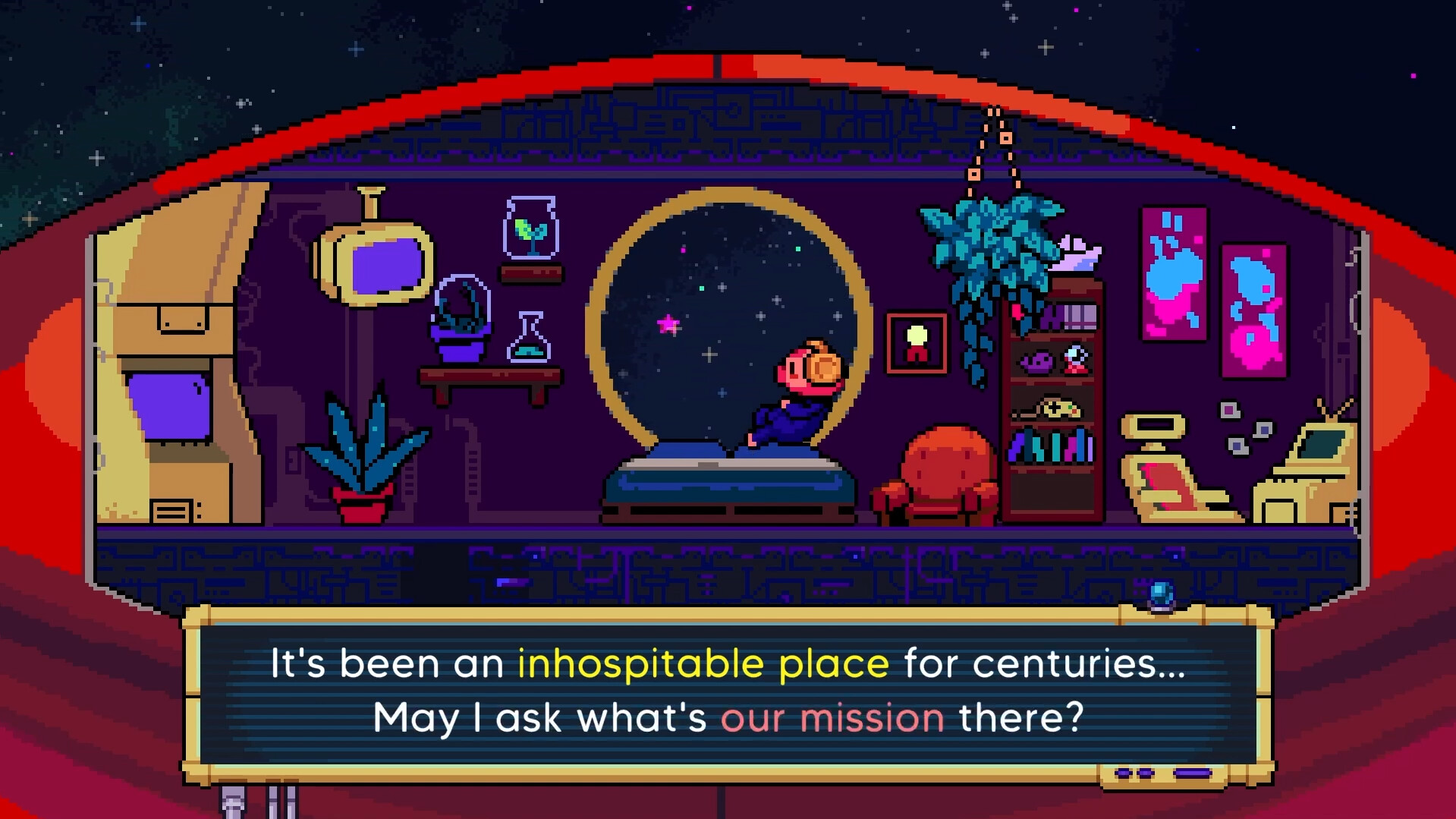
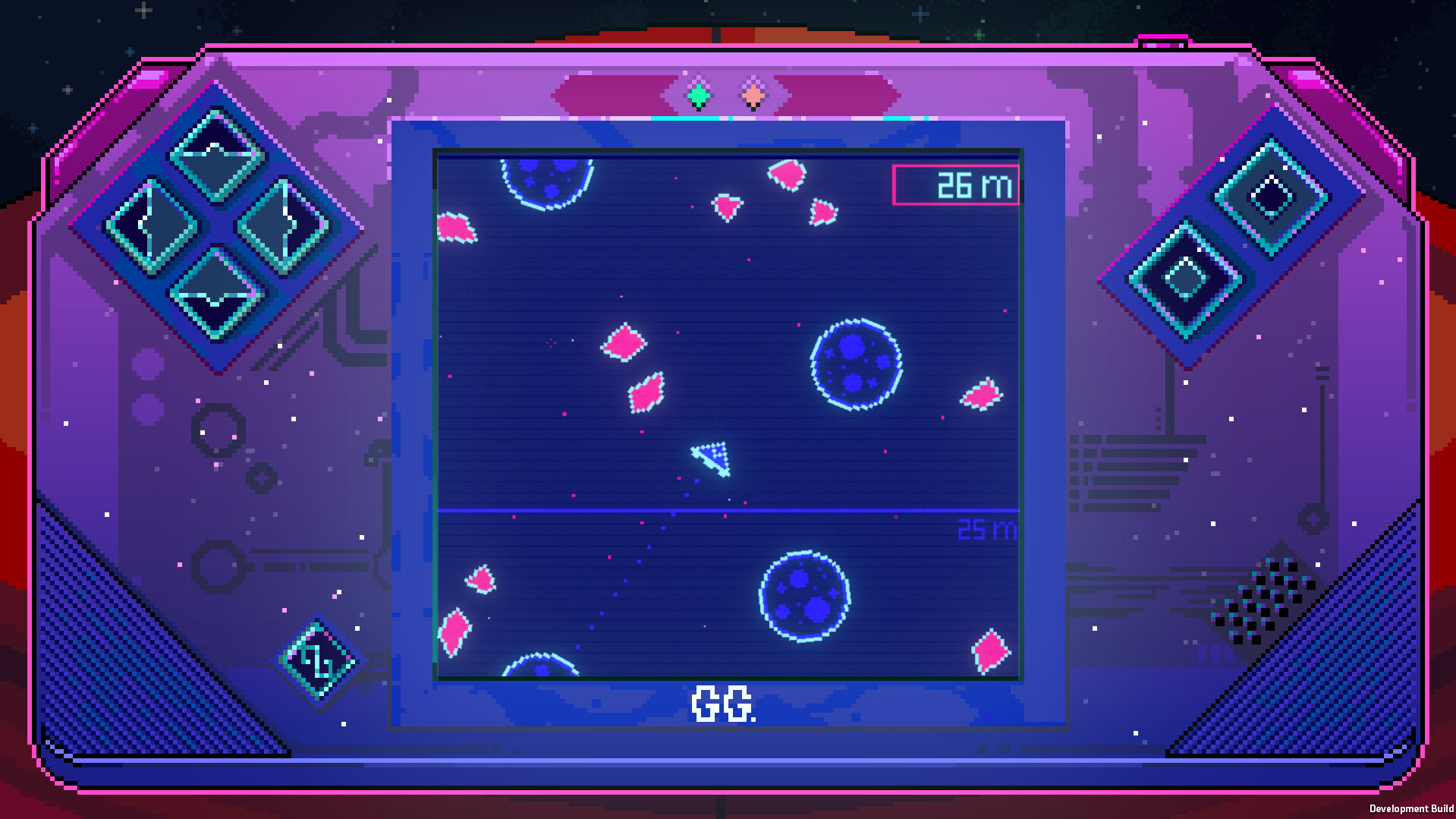
After many attempts, Igor and Raposo held a kind of internal “competition”, each proposing a different game design approach to the problem, and in the end we preferred Raposo’s solution. The new structure split the game into safe areas and unsafe areas. The unsafe regions could better preserve what had worked in the original prototype, while the safe areas gave us room for everything we wanted to add to the game and that simply did not fit that initial format. We also created a mobile hub, Buyk’s ship, which turned out to be a great opportunity for characterization, especially useful for a silent protagonist. We scattered other characters through the safe areas of the three worlds that make up the final game.
At the same time, we completely changed the tone of the experience. We left that accelerated speedrun dynamic for a much more contemplative, quiet, lo-fi game. Lo-fi, which was still very much in fashion then, was new to Piêr, our musician, but he dug into the genre, studied references, listened to a lot of it, and ended up producing a fantastic soundtrack: almost 50 tracks, completely original, now available on Steam and for free on YouTube and on Spotify (links below). The soundtrack ended up making the game a finalist for Best Audio at gamescom latam 2024 (Latin America’s biggest games industry event), and the only Brazilian game in the category. That lo-fi aesthetic came to guide a large part of the rest of the project: the palette, the pacing, the tone of the narrative, and especially the more melancholic and introspective sides of space.
And space is a particularly interesting theme to write about, because it can be about absolutely anything (after all, the universe is, literally, everything we know). We started from a 1950s and 1960s space-ranger image, a bit comic book, a bit Soviet, a bit like Astronauta from Turma da Mônica (Monica’s Gang, Brazil’s most famous comic), and built a small story in between the gameplay segments.
The levels have different mechanics and change often, which helps keep the experience from dragging. A large part of that came from the excellent level design work of Filipe Fontoura, our game design intern, along with Igor. To make the art production viable, we also brought in a few interns, Pedro Pinho and Thaís Oliveira, who did really good work. Closer to the end of the project, we also called in Eco, who helped produce content for marketing.
Six years after that game jam, we finally released Astro Pig, on May 1st, 2024. In that stretch, Garoa had already made three other commercial releases: Cartomante, Stand by Me, and Cat Leather Jackets, in co-development. Saying that finally releasing the game was a relief would be an understatement. I think all of us were already very tired of living with the same project for so long. And this may be one of the most dangerous consequences of marrying an idea, or of committing to carry something through to the end simply because you already started, even when that project may no longer have the same potential, or when you no longer have the same desire to make it.
Despite that, I was very happy with the game we shipped. We also won Best Game by Popular Vote at gamescom latam, which gave us the chance to get up on stage, thank people for the award, and shake hands with some big names in the Brazilian games community, like BRKsEdu (one of the country’s best-known gaming YouTubers). The project also opened up different opportunities for us over those years, and we learned a lot about game development, running a company, fundraising, long-term production, and, perhaps above all, recognizing the limits of an idea. If there is one cautionary tale I would leave from this story, it is this: be careful about taking a game jam project and deciding that it necessarily has to become a full game. Sometimes a game works perfectly for a weekend game jam because it was made to last only a weekend.
You can hear a version of this story at the following link, in an episode of Controles Voadores, a Brazilian games podcast (available only in Brazilian Portuguese).
- audacity
- clickup
- discord
- google docs
- google sheets
- photoshop
- premiere
- sns
- telegram
- trello
- unity
As one of our longest-running projects, I’ve touched on every aspect of it at some point. I was the dedicated narrative designer, writer, and localizer in Brazilian and English, the executive producer responsible for securing funding, and the one responsible for marketing and PR. I also did a little bit of game design, level design, and UI/UX, and conducted playtests, reviews, and quality assurance together with our game design team. I also made a small contribution writing lyrics and recording vocals for one specific OST track (I won’t tell you which, but if you hear a lady singing in Japanese in what seems to be a sample from an ’80s song, pay close attention).
- Official selection for Cozy Quest 2025
- Finalist for the GWB Game Awards 2024
- Winner of the Popular Vote at gamescom latam BIG Festival 2024
- Finalist for Best Brazilian Game at gamescom latam BIG Festival 2024
- Finalist for Best Sound at gamescom latam BIG Festival 2024
- Official exhibitor at Perifacon 2023
- Official selection for Festival Jogatório 2023
- Official selection for the 7th Ecrã Festival
- Recipient of the Startup Rio 2020 grant from the State of Rio de Janeiro
- 2019 Game of the Year by Popular Vote at Drops de Jogos, a Brazilian games news site
- Winner of Best Game by Popular Vote at SBGames 2019
- Official selection for Panorama Brasil Students at BIG Festival 2019
- 2nd place at the Game Audio Showcase at Bizzart Festival 2019
- Winner of the Games Showcase at SJEEC 2019
- Winner of Gamethon at Hacktudo 2018