Cartomante – Fortune Teller
A comedy and magical realism visual novel in which you read tarot for eccentric clients.
- narrative design
- writing
- ui/ux
- production
- social media
- pr
- marketing
- publishing
- localization
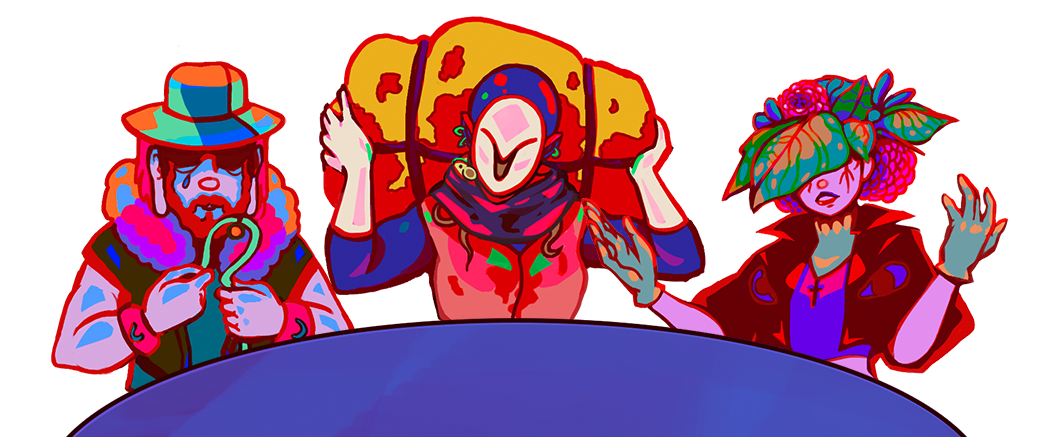
In Cartomante, we set out to create an authentic narrative of everyday life, Latin American at its roots and Brazilian at its core. The game is a modest homage to the urban folklore of Rio de Janeiro, presented through an experience of magical realism.
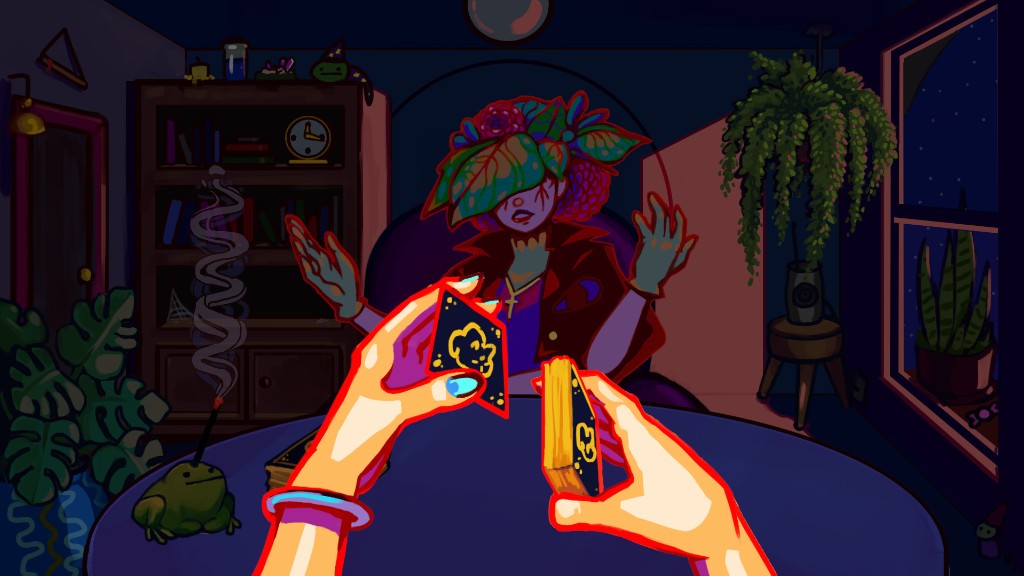
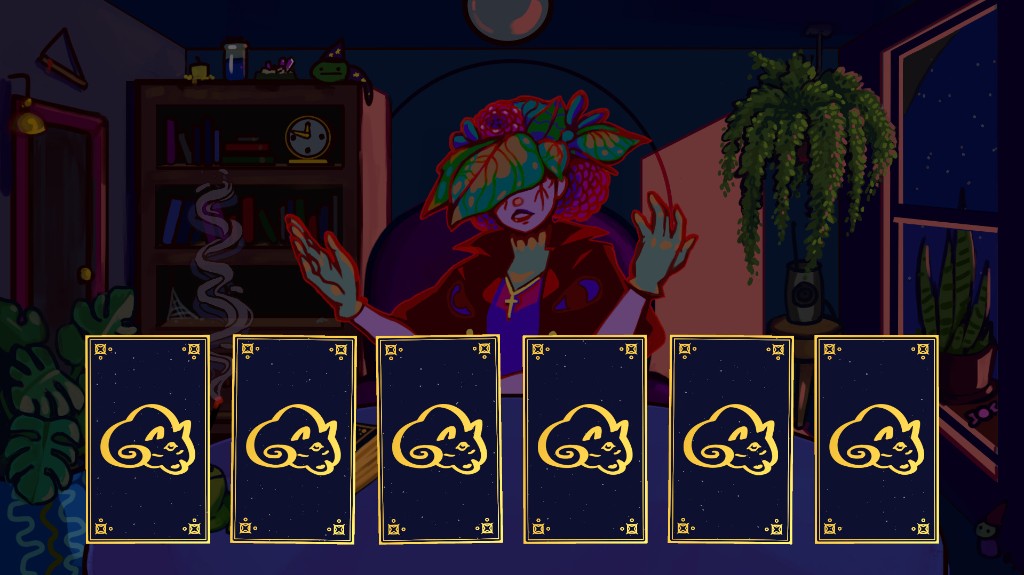
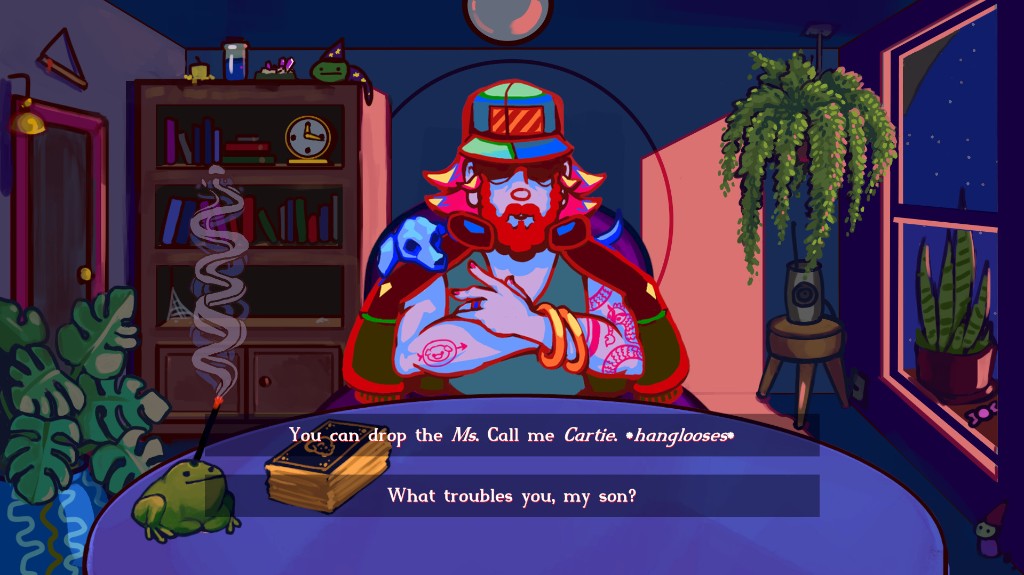
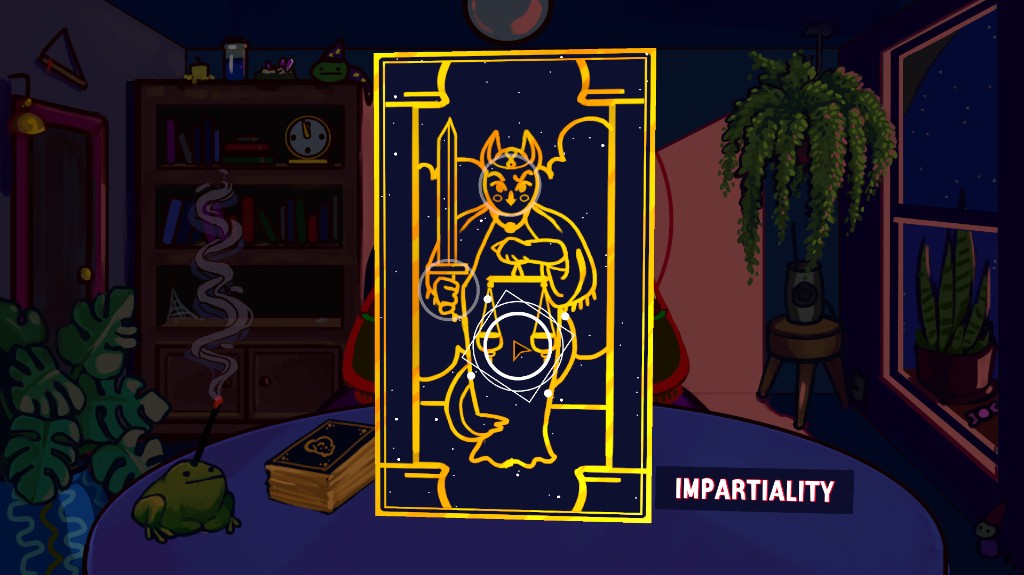
The project came out of an interesting moment for Garoa. In 2020, we had been working on Astro Pig for a while, testing new mechanics, exploring different directions for level design, narrative, and art, but feeling very creatively stuck. AP’s puzzle-design pillar, “Buyk has to walk around little planets and unlock stages by throwing objects and changing their trajectory in mid-air”, was proving to be a great limitation for a game jam, but a difficult one to sustain across an entire game - and we were struggling to shape it into a cohesive product we could actually sell. It was, at the same time, too complex for casual players, but too imprecise in its controls for hardcore ones.
After some back-and-forth, which culminated, predictably, in us getting discouraged from working on it, we made the decision to “get a change of scenery”. We did an internal jam, lasting about a week, in which we made a very small-scope game from beginning to end - and it was already, practically, identical to the final version of Cartomante.
The idea came from our experience of long bus rides down Avenida Brasil (a major avenue in Rio de Janeiro), where, at a certain point along the way, you could see painted walls advertising the services of a certain Feiticeira da Ilha (“The Island’s Sorceress”, in a literal translation): a do-it-all tarot reader, an I-solve-your-problems kind of woman.
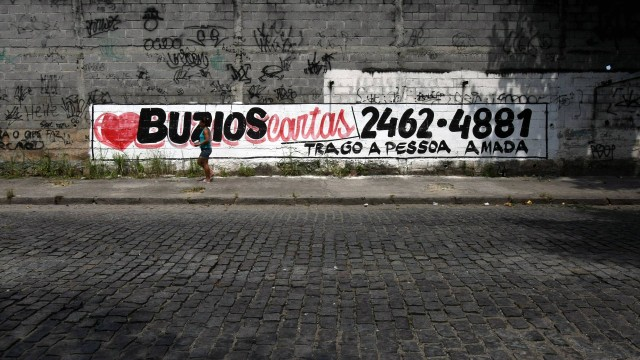
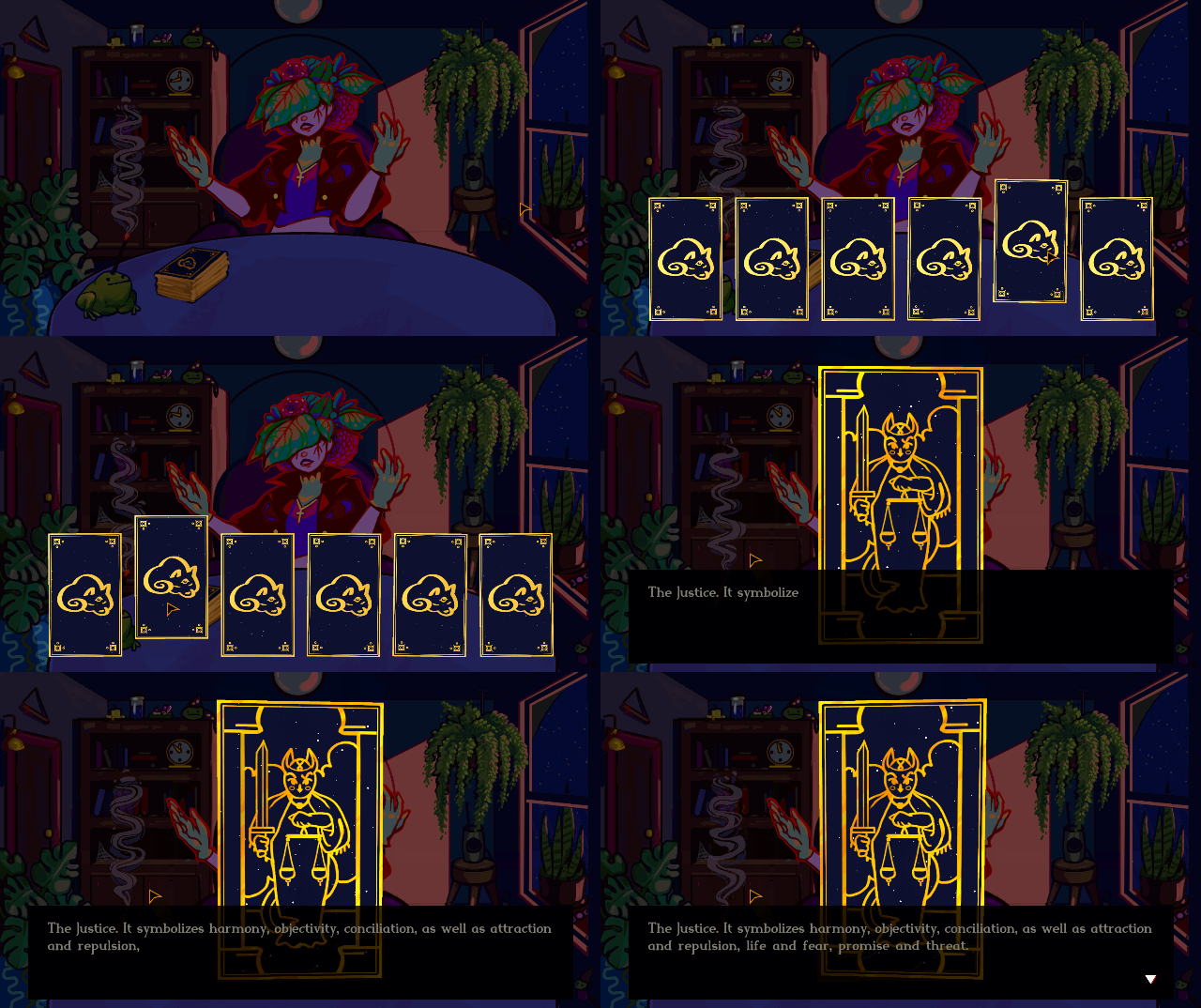
Based on that simple concept - “what if she were a professional, sly but honest, hardworking but tired, and you played as her, drawing cards for weird clients?” - we built the game’s basic loop. You take the place of the mysterious Miss Cartomante, at the end of a Tuesday, seeing her final three clients before calling it a day.
The final result, though, turned out so interesting (in large part because of Carol’s unusual, colorful, eye-catching art, and the comedic, mysterious tone bordering on the nonsensical) that I floated the idea to the others: “what if we actually put this up for sale?” It wasn’t a proposal people immediately jumped at - the game really wasn’t very polished, it hadn’t been ‘productized’ for more demanding audiences, and it would be very short. We would have to sell it cheap. Even so, we figured it would be a good opportunity to learn the process of releasing something, self-published, as a studio.
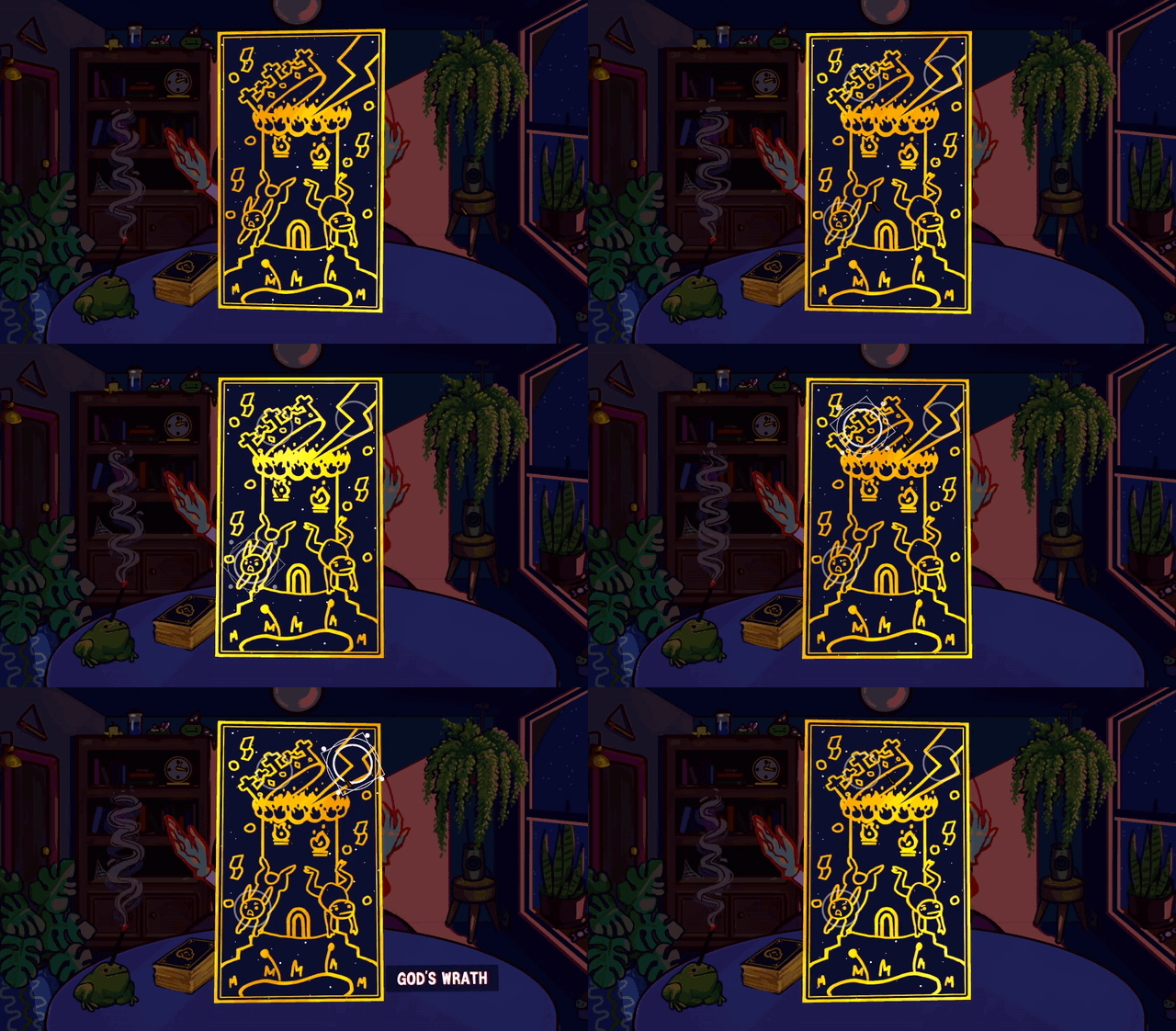
Over the two months following that original week-long “internal jam”, I worked on writing the rest of the dialogue. Because of our self-imposed scope limitations, we would only have those same three clients across every run. Also because of those limitations, we would only have three of the Major Arcana (to the frustration of some players to this day). To add a little variety, each card can be interpreted in three different ways. And with that combination of clients, cards, and readings (plus a few additional dialogue choices), we managed to reach the final version with more than thirty endings (with all of the original text written in Portuguese and English in parallel - no machine translation or AI back then).
Curiously, despite being our shortest game, our cheapest one, the only one (at the time) we had not originally intended to release commercially, and definitely our least polished, Cartomante is, in some respects, our biggest success; it is how many of our fans first discovered us, it held our sales record for years, and its visual and creative direction ended up becoming the cornerstone of our studio for quite a while.
- unity
- ink
- twine
- trello
- photoshop
- discord
- telegram
- sns
I spent the most hours working on the game’s narrative, from start to finish: design, worldbuilding, characterization, story, dialogue and choice branching, writing, editing, and revision in both the English and Brazilian Portuguese versions.
My other major contribution was in production, organizing the workload, managing deadlines, defining scope, and setting up and coordinating the game’s publication on Steam, itch.io, and Nuuvem.
I was responsible for most of the marketing and social media upkeep related to Cartomante, as well as its PR efforts: bringing the game to live events, conventions, and festivals, applying to showcases and awards, distributing keys to creators and streamers, and taking part in podcasts, interviews, and other media appearances.
I also contributed to the game’s interface, user experience, and the design of a few small quality-of-life features.
Coding was done by the infallible duo Gabriel Raposo and Igor Carneiro (the latter also being the person most responsible for the core game design concept and vision), art by Carol Sá, and music and sound effects (all original, as we usually do) by Pier Piccolo.
- Finalist for Best Brazilian Game at BIG Festival 2021
- Honorable Mention for Best Narrative at SBGames 2020
- Official selection for the Arts Festival at SBGames 2020
- Official selection for the 5th Ecrã Festival
- Official selection for the Chainsaw Game & Music Festival 2021